Senator Ben Brown’s Capitol Report for Feb. 9, 2026
Monday, February 9, 2026
Senator Ben Brown’s Capitol Report for Feb. 9, 2026
February Starts Strong
February looks to be another fruitful month of policymaking in Jefferson City. Hundreds of proposals have been referred to committees, including more than a dozen of mine, and public hearings are in full swing. This week, senators began deliberating legislation on the floor, and I presented two more of my bills in committee.
On Feb. 2, I presented Senate Bill 896 to the Senate Local Government, Elections and Pensions Committee. For the last four years, I’ve fought to protect Missouri’s elections from outside interference—the biggest threat to our sovereignty and voters’ self-determination. In 2020, more than $400 million “Zuckerbucks” flowed through the Center for Tech and Civic Life to election offices—often favoring certain areas—while demanding data “improvement plans” and operational control in return. Missouri banned direct private donations, but now donors are dodging the law with loopholes through membership models, in-kind contributions and indirect funding. Senate Bill 896 closes these loopholes exploited by outside groups to influence our elections, ensuring no private entity (including those with foreign ties) can exert control over how Missouri runs its elections. Watch here to learn more about the benefits of SB 896.
The General Laws Committee heard my Senate Bill 1064 on Feb. 4, which would establish statewide preemption over local regulations on the sale of tobacco, alternative nicotine and vapor products, creating one clear, uniform set of rules across Missouri instead of the current patchwork that harms small business owners. Right now, conflicting local ordinances can impose extra restrictions, such as non-transferable licenses, that drastically reduce a store’s value or make it nearly impossible to sell after years of hard work building a convenience store, gas station or vape shop. Senate Bill 1064 protects these hardworking Missouri entrepreneurs by ensuring consistency (similar to alcohol sales rules), while still allowing local enforcement of under 21 sales bans, and leaving zoning decisions untouched. I’m hopeful this bill will make it through this year in an effort to safeguard small businesses and the American dream right here in our state.
On Feb. 3, my Dental and Dental Hygienist Compact bill was passed by the Senate Emerging Issues and Professional Registration Committee. Senate Bill 988 is a carryover from last year which will establish and facilitate an interstate network of providers with provisions to ensure our state sovereignty is maintained and that any rules proposed by the compact are in line with Missouri statutes, as well as the state and U.S. Constitutions. Missouri is surrounded by eight states, and I think a compact will reduce red tape and attract dental professionals to Missouri without having to jump through licensing hoops or keep taking expensive exams.
Eliminating Barriers to Work
To keep Missouri competitive with its eight surrounding states, it must eliminate barriers that prevent or delay professionals from entering the workforce. My proposal to recognize real-world licensure for qualified professionals relocating from other states will help remove unnecessary government barriers to employment. Senate Bill 895 allows individuals with at least three years of work experience in an occupation or profession in another state to apply for a one-time, nonrenewable, two-year temporary license, enabling these qualified candidates to continue working while they complete any remaining requirements for permanent licensure in Missouri. Creating a pathway for individuals moving from states without licensure requirements to continue working in their field benefits everyone involved. Last year, a similar bill almost made it to the governor’s desk. I’m hopeful it will reach that destination in 2026.
Reforming Missouri’s Prior Authorization System
I believe our state’s current prior authorization requirement for vital health care services puts insurance companies’ profit margins above patient care. Senate Bill 897 would reform this outdated policy, ensuring that patients can obtain the medical procedures, medications and other vital health care services they need in a timely fashion. It’s time to end prior authorizations and put health care decisions back in the hands of patients and doctors.
Protecting Taxpayers from Erroneous Tax Classifications
I’m pleased to report that my legislation regarding erroneous property classifications, Senate Bill 987, has passed out of committee and is now eligible for floor discussion. The bill updates Missouri law to allow taxpayers who successfully appeal an erroneous real property classification by an assessor—such as wrongly classifying agricultural property as commercial—to recover their reasonable appeal costs and attorney fees.
This legislation was prompted by a real-life case from one of my constituents whose property was misclassified as commercial despite being used for standard agricultural activities, resulting in unfair taxation. This bill promotes accountability and ensures Missouri property owners have meaningful recourse when assessors make costly mistakes.
Income Tax Debate Begins
The Missouri House of Representatives’ Commerce Committee conducted a hearing on the resolution, which will ask voters whether or not they want to phase out Missouri’s income tax, House Joint Resolution 174. I believe this has broad support and look forward to discussing this important topic with my Senate Colleagues.
Visitors from the District
On Jan. 14, I visited with Tonya Hankins, M.Ed., CRADC, the executive director of Hananihouse, a recovery support provider in Washington. Their mission is “building foundations of recovery and success.” I also heard from Brendon Steenbergen, the executive director for the Missouri Coalition of Recovery Support Providers.
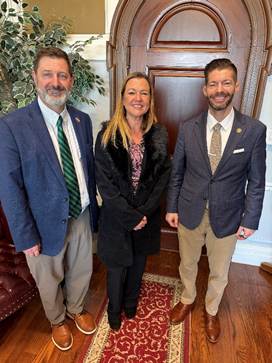
I also enjoyed speaking with David Palatnik, Dafna Palatnik, Rabbi Jeffrey Abraham and former state representative, Stacey Newman. They were at the Capitol to advocate for Senate Bill 1051, which will strengthen Missouri’s antisemitism practices in educational institutions.
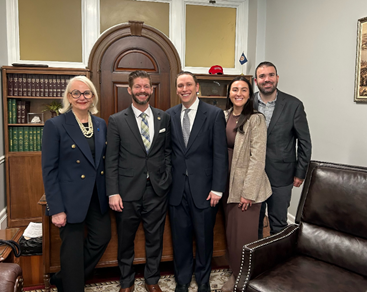
Members of the Missouri Foundation for Health MoCAP visited this week. Jennifer Carter Dochler, left, and Ashley Brooks, executive director of The Rolla Mission, right, explained their work with helping nonprofits and government agencies apply for health-related grants.
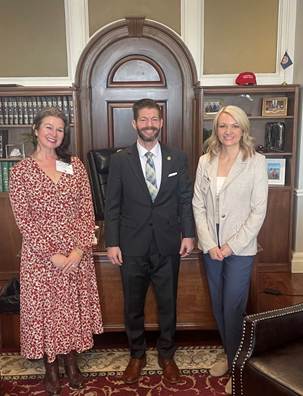
It’s an honor representing District 26 in the Missouri Senate. If you need assistance with navigating state government or the legislative process, please reach out by calling 573-751-3678 or emailing Ben.Brown@senate.mo.gov.